
What Carpentry Trainees Learn at Give N Go
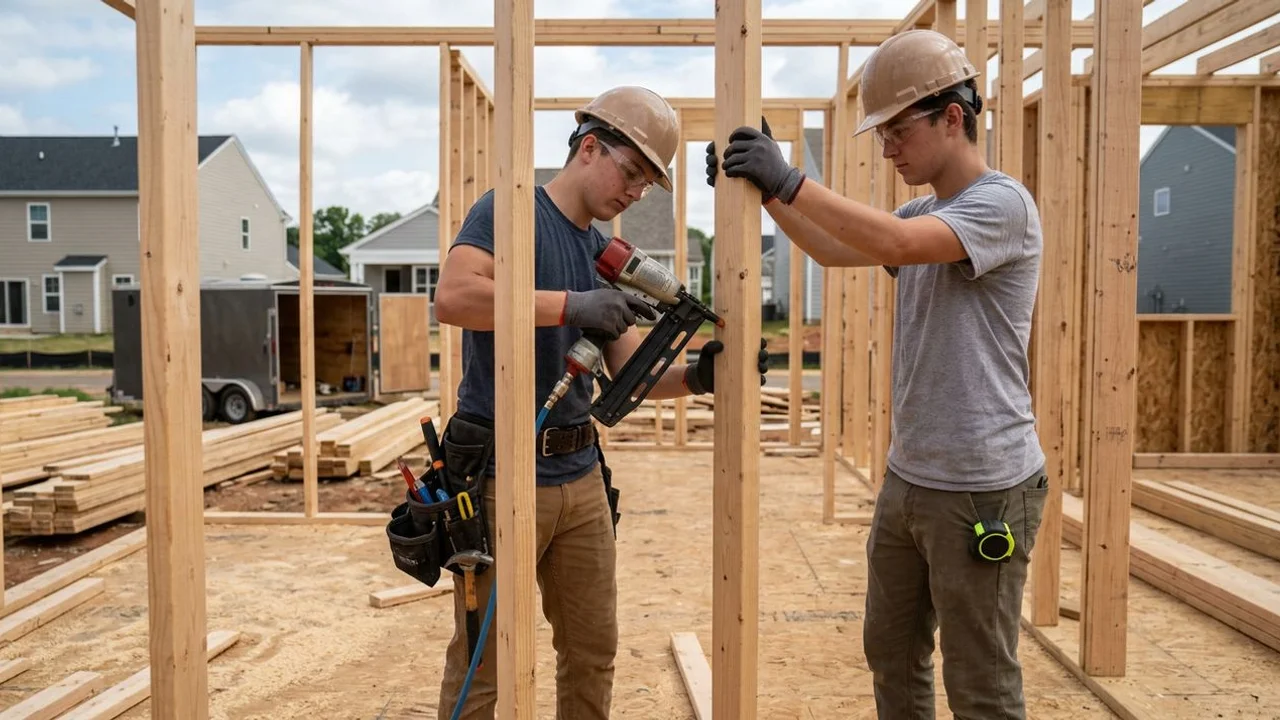
Inside Charlotte carpentry training: framing fundamentals, blueprint reading, finish carpentry techniques, and table saw / framing nailer safety under OSHA 10.
We all know that finding reliable, highly skilled tradespeople is one of the biggest bottlenecks in construction today. Charlotte’s residential and multifamily build pipeline is driving massive local demand, with the region adding over 28,000 new housing units recently just to keep pace.
Our team sees this not just as a labor shortage, but as an opportunity to raise the standard of workmanship across the board.
“A well-trained crew is the most valuable asset on any job site.”
This urgent need requires a comprehensive training solution. We built the Carpentry Training curriculum at Give N Go specifically to answer this industry-wide challenge.
The program covers rough framing, finish carpentry, blueprint reading, and mandatory OSHA 10 safety certification. Our curriculum prepares workers to step onto your job site ready to perform from day one.
The details matter when you are hiring a crew. We will break down exactly what each training module entails below.
Module 1: Tools and Safety
We start every trainee with a rigorous foundation in job site protocols. Proper equipment handling prevents the costly delays that frustrate property owners. Our instructors prioritize hands-on practice with the exact tools they will use on your property.
- Hand Tools: Mastery begins with the basics like hammers, speed squares, levels, and chalk lines. We ensure students can use utility knives and tape measures with absolute precision.
- Power Tools: Students train extensively on industry-standard DeWalt and Makita circular saws, table saws, and framing nailers.
- Safety Protocols: Fall protection remained the top OSHA violation in 2025, recording nearly 6,000 citations nationwide. Our program tackles this directly by teaching proper ladder use, kickback prevention, and strict PPE compliance.
- OSHA 10 Integration: Safety is woven into every lesson to keep your site compliant and secure. We require this certification so you never have to worry about basic safety ignorance.
Module 2: Framing Fundamentals
Our framing module teaches the structural backbone of any durable building. A solid frame prevents the drywall cracks and sagging roofs that plague poorly built structures. We provide the comprehensive framing training Charlotte contractors demand by focusing heavily on local residential building codes.
- Layout Rules: Trainees learn to mark top and bottom plates accurately. Standard 16-inch on-center stud spacing is strictly enforced for load-bearing walls to meet building codes.
- Wall Assembly: Students practice building walls that are perfectly plumb, square, and securely braced. We also teach them to apply structural sheathing correctly to withstand high winds.
- Rough Openings: Framing for doors, windows, and mechanical chases requires exact measurements. Precise rough openings prevent costly adjustments during the finishing phase.
- Joists and Rafters: The course provides a thorough introduction to floor joists and roof framing systems. Our instructors explain these elements so graduates understand how the entire structure carries weight.
Module 3: Blueprint Reading
We know that misinterpreting plans wastes thousands of dollars in materials. A skilled blueprint reading carpenter ensures the final product matches the architect’s exact vision. Our students learn to translate complex technical drawings into physical reality.
Even though half of US construction firms still relied on paper during the design phase in 2025, digital literacy is essential. Trainees learn traditional blueprint reading alongside concepts used in top-rated estimating software like Bluebeam Revu. We make sure they are prepared for both modern and traditional job sites.
- Plan Views: The module covers floor plans, precise dimensions, and structural layouts.
- Elevations: Students learn to read exterior views to understand final finishes and siding details. We emphasize these drawings so exterior elements align perfectly.
- Sections: Wall and roof sections provide critical insight into the structural integrity of the build.
- Schedules: Trainees master door, window, and finish schedules to keep material orders accurate. Our focus on schedules prevents frustrating delays in the supply chain.
Module 4: Finish Carpentry
Our finish carpentry training focuses on the visible details that property owners notice most. Clean cuts and tight joints define the final quality of any interior space. We train crews to deliver pristine results on every trim and door installation.
Popular regional choices like Craftsman-style baseboards require exact precision to look right. Students practice coping inside corner cuts, ensuring joints stay tight even as seasonal humidity changes the wood. Our hands-on approach guarantees a professional finish that adds real value to your property.
- Door Hanging: Trainees learn the precise art of hanging both pre-hung and heavy slab doors.
- Trim Work: The course covers the installation of casing, baseboards, and intricate crown molding. We require flawless execution on these highly visible elements.
- Coping Techniques: Mastering inside corner cuts eliminates the ugly gaps caused by standard miter joints.
- Cabinetry Intro: Basic cabinet installation standards for kitchens and bathrooms round out the module. Our instructors ensure they understand the fundamentals of a level, secure install.
After the Track
We connect our highly capable graduates directly with the local industry. Charlotte residential and multifamily contractors frequently hire PACT carpentry graduates into their framing or finish crews. Our partnerships with the Home Builders Association open doors to excellent general construction roles.
The regional market requires reliable talent to complete projects on schedule. See carpenter careers and pay for the specific wage path and growth potential. We ensure every student leaves ready to contribute from day one.
Apply
We make starting this career path as accessible as possible. Tuition-free spots are available for accepted participants.
Taking the next step is simple and straightforward. Our team is ready to answer any questions about the enrollment process.
You can start exploring our carpentry training curriculum today. Contact us to secure your place.
Common Questions
Rough or finish carpentry?
Will I learn to read blueprints?
Do I need my own tools?
Ready to start Carpentry?
Tuition-free for accepted participants. Apply, refer a student, or talk to a partner about hiring graduates.