
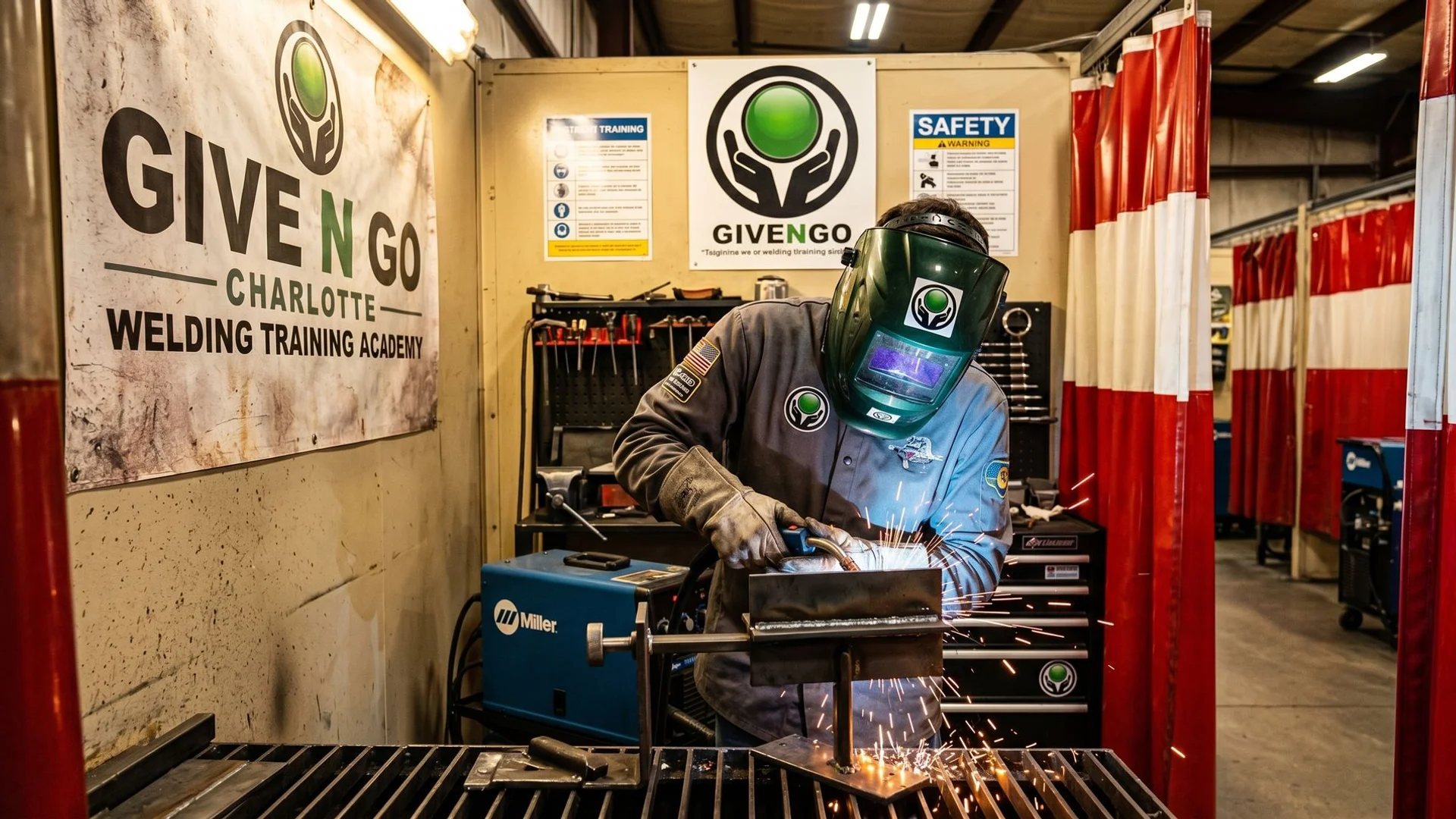
Welding Training in Charlotte — MIG, TIG, and Stick
Welding processes (MIG, TIG, stick) with AWS-aligned safety and career-ladder context for NC manufacturing and structural work.
Welding remains one of North Carolina's highest-leverage manufacturing and structural trades. Give N Go's welding track introduces MIG, TIG, and stick processes alongside OSHA welding safety and PPE, with hands-on lab progression aligned to American Welding Society (AWS) skill milestones.
Welding Training Curriculum
Have you noticed how hard it is to find skilled labor these days? It feels almost impossible to fully staff a fabrication shop or manufacturing floor.
As a professional service team, we understand the frustration of delayed projects and rising costs caused by a lack of trained professionals. The American Welding Society projects a staggering 400,000-welder shortage in the US by 2026.
Our Give N Go welding training track is built specifically to solve this exact problem for local NC manufacturing, structural fabrication, and pipe shops.
This program introduces the three core processes of MIG, TIG, and stick welding with AWS-aligned skill milestones. You will get full safety integration right from day one.
What You Learn
The curriculum covers the exact skills local employers demand. We break the welding training down into practical, hands-on modules. Your team learns the science behind the sparks.
Our instructors focus on building muscle memory and proper technique. Here is what the core program covers:
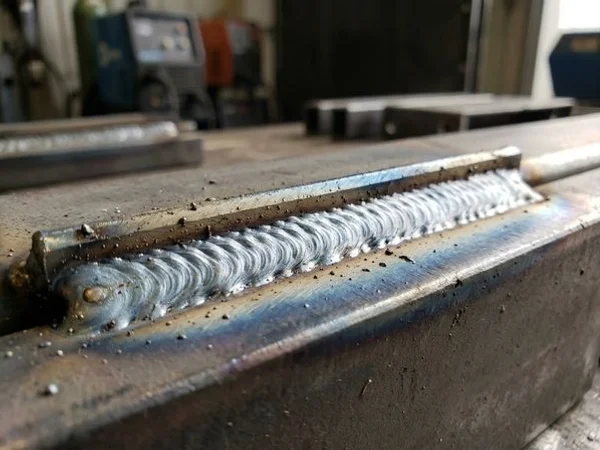
- MIG (GMAW). MIG welding accounts for over 28% of the global welding equipment market share in 2026. We teach this wire-feed method first because it is highly efficient for production work. This process is the absolute starting point for most trainees. Our shop environment simulates real-world manufacturing lines to build confidence. Students master the basics of laying clean beads quickly.
- Stick (SMAW). Stick welding is highly field-friendly and reads exceptionally well to NC structural employers. We ensure students can meet AWS D1.1 structural welding code standards. This rod electrode welding method is essential for heavy construction and outdoor repairs. Our program prepares graduates for immediate placement on commercial job sites. The ability to weld thick steel with simple equipment is incredibly valuable.
- TIG (GTAW) introduction. TIG welding requires serious precision and focus. We give students vital stainless and aluminum exposure. The process covers tungsten preparation and gas tungsten arc fundamentals. Our trainees learn the exact puddle control needed for specialized applications. These materials are heavily used in aerospace and food-grade equipment fabrication.
- Welding safety and PPE. Safety is the foundation of every single task in the shop. We prioritize hazard awareness to protect both the worker and the business owner. OSHA fines for serious safety violations topped $16,550 in 2025. Our modules cover booth setup, fume extraction, electrical hazards, leathers, helmets, and fire watch protocols. Exposure to dangerous byproducts like hexavalent chromium is a real risk.
We document all procedures thoroughly.
For the cohort schedule and tools breakdown, see the welding processes, tools, and safety guide.
Career Path
The local job market is incredibly eager for fresh talent. We see graduates move quickly into entry-level welder roles or apprenticeship-style placements with NC manufacturers and fabricators. The average age of a US welder is 55 years old right now.
Our industry contacts confirm this is creating a massive retirement gap. You can step right into these open roles with the right training. We track local compensation data closely to guide student expectations.
| Experience Level | Average NC Salary (2026) | Hourly Estimate |
|---|---|---|
| Entry-Level | $36,000 - $40,000 | $17 - $19 |
| Mid-Level | $46,450 - $54,800 | $22 - $26 |
| Senior-Level | $61,000+ | $29+ |
Graduates often see fast wage growth as they gain specific certifications. Senior-level fabricators command top dollar due to the ongoing labor shortage. We recommend comparing different local industries to find the best fit.
See the welder careers and pay guide for the NC salary picture.
Apply or Refer
A rewarding career in the trades is completely within your reach.
We offer this welding training program tuition-free for accepted participants. The demand for skilled labor has never been higher in the US.
Our team is ready to answer any questions you might have. You can easily start the application process today.
Contact us to apply or refer a student.
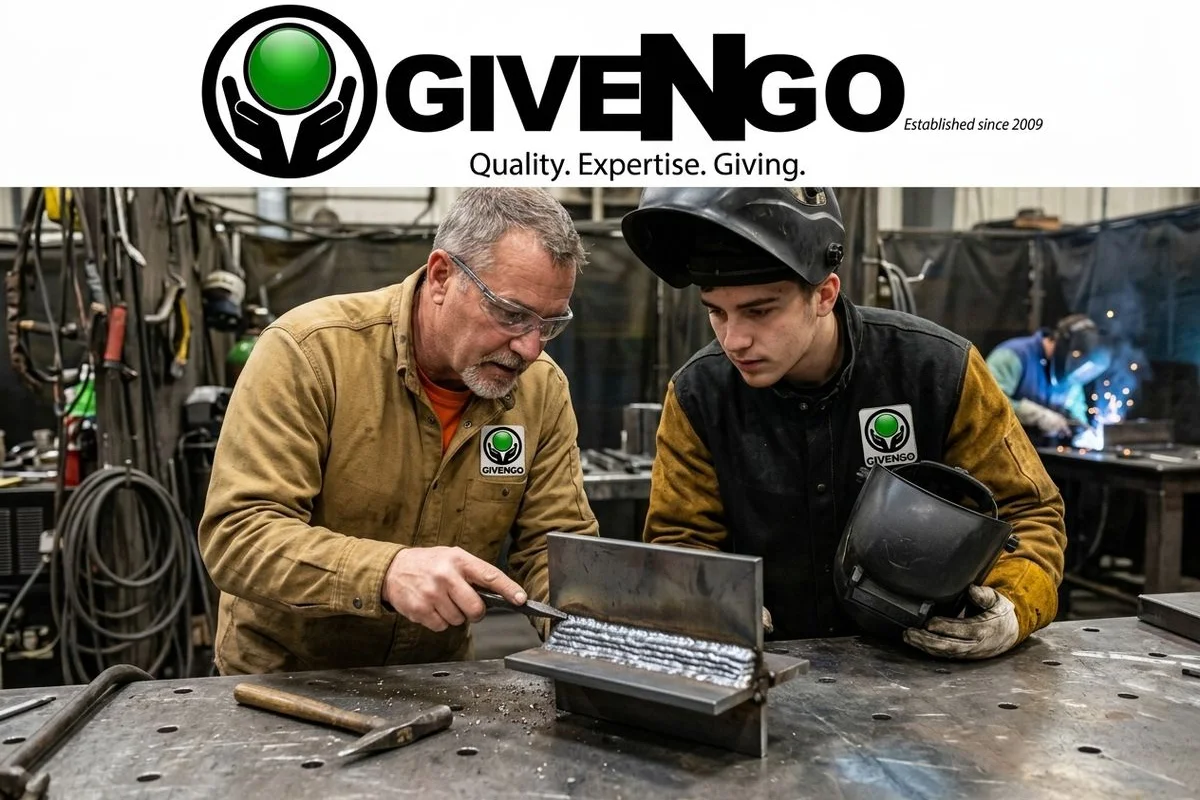
Welding Skills & Career Outcomes
- • MIG, TIG, and stick welding fundamentals
- • OSHA welding safety and PPE
- • AWS-aligned skill milestones
- • Structural, pipe, and manufacturing welding context
- • Career-ladder mapping for NC employers
How a Cohort Runs
Safety + PPE
Booth setup, fume extraction, electrical hazards, leathers and helmets.
MIG
Wire feed, gas selection, joint setup. Lab beads on flat and horizontal.
Stick (SMAW)
Rod selection, arc strike, bead control. Structural-style joints.
TIG Intro
Tungsten preparation, gas tungsten arc fundamentals, stainless and aluminum exposure.
Connecting People and Opportunities
Building partnerships that create real impact in Charlotte-Mecklenburg.
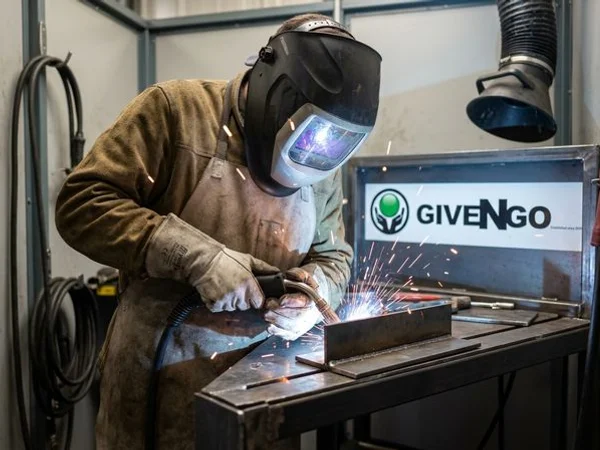
Ready to Get Connected?
We help connect individuals with the right opportunities through our partner network.
Welding: Common Questions
Find answers about connecting with opportunities and partners.
Do I need experience?
Will I be AWS certified?
What employers hire welders?
Explore More Pathways
PACT Pre-Apprenticeship
USDOL-recognized pre-apprenticeship credential combining classroom learning with 75% work-based training and direct employer connections.
Framing & finishCarpentry Training
Carpentry training covering framing fundamentals, blueprint reading, finish work, and Charlotte residential demand.
Ready to get connected?
Whether you're looking for opportunities, seeking to partner, or wanting to support our mission — we'd love to hear from you.