
Welding Processes, Tools, and Safety in the Give N Go Track
Inside Give N Go's welding curriculum: MIG, TIG, and stick processes; AWS-aligned skill milestones; OSHA welding safety and PPE.
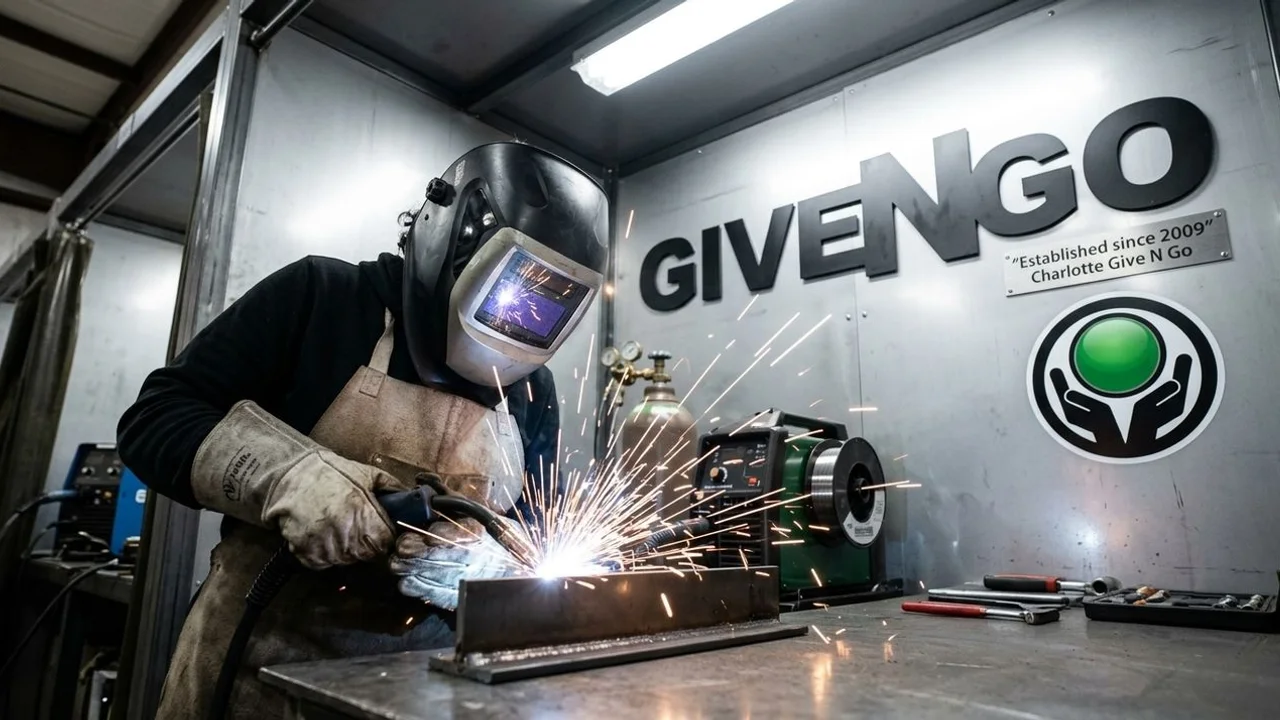
We often see clients surprised by the level of precision required for structural repairs. A solid foundation in the right welding training curriculum separates a temporary fix from a permanent solution.
Our team designed the Welding Training track at Give N Go to cover three core processes: MIG (GMAW), TIG (GTAW), and stick (SMAW). It also emphasizes booth safety and AWS-aligned skill milestones.
We will look at these specific methods and explain why they matter for your next project.
Module 1: Safety and Booth Setup for the Welding Training Curriculum
We mandate strict protocols before you ever strike an arc. Proper preparation prevents serious injuries and costly project delays.
- PPE: You need an auto-darkening helmet like the Lincoln Electric VIKING 3350. This specific model uses 4C Lens Technology to provide true color clarity. Clear vision helps prevent mistakes on delicate metalwork. You also need Tillman leather sleeves, gloves, steel-toe boots, and dedicated ear protection.
- Booth Setup: Proper curtain placement prevents harmful flash burns for bystanders. Fume extraction systems must meet the OSHA 1910.252 standard for ventilation.
- Electrical Hazards: Stinger handling and work clamp placement dictate the stability of your arc. Voltage awareness prevents severe shocks.
- Hot Work: Fire watch protocols require a designated person with an extinguisher. All combustibles must be removed from the immediate area.
OSHA 10 construction safety training is fully integrated into this phase.
Module 2: MIG (GMAW)
This process is the starting point for most trainees. Wire-feed welding uses a continuous solid wire electrode and a shielding gas to protect the weld pool. Our instructors often start beginners on MIG. It allows for fast, clean repairs on common materials like fencing and lawnmower decks.
- Setup: A reliable choice for standard steel repairs is ER70S-6 wire paired with a 75% Argon and 25% CO2 gas mixture. This specific blend significantly reduces spatter. Shops carrying welding tools charlotte wide usually stock this exact setup.
- Joints: You will practice flat, horizontal, vertical, and basic overhead positions.
- Bead Control: Travel speed, torch angle, and weave technique dictate the strength of the final bond.
- Common Defects: Porosity, undercut, and lack of fusion compromise structural integrity.
We teach you how to spot these errors before they cause a failure. Catching a defect early prevents structural failures that cost thousands in rework.
Module 3: Stick (SMAW)
Rod electrode welding is an older method that remains highly effective in the field. It reads well to North Carolina structural fabricators handling heavy farm equipment or rusted gates. Our teams rely on stick welding outdoors. Wind simply blows away the shielding gas used in other methods.
| Rod Selection | Tensile Strength | Best Application |
|---|---|---|
| 6010 | 60,000 psi | Deep penetration through rust and dirt. |
| 6011 | 60,000 psi | Similar to 6010 but runs on AC power sources. |
| 7018 | 70,000 psi | Structural-style joints needing high strength. |
- Arc Strike: You must master both tap and scratch starts to ignite the electrode.
- Bead Control: Maintaining the correct arc length, angle, and travel speed requires a steady hand.
- Structural-Style Joints: Common configurations include lap, fillet, and butt joints.
We ensure you can handle these foundational techniques with confidence. Every solid structural repair depends on mastering these basics.
Module 4: TIG (GTAW) Introduction
The precision side of fabrication requires a completely different approach. Businesses use TIG for restaurant stainless steel counters, custom aluminum fabrication, and code-quality work. Our comprehensive mig tig stick training introduces this advanced method to build well-rounded skills.
- Tungsten Preparation: Using a 2% Ceriated tungsten electrode provides excellent arc stability. You must master the exact grinding angle and point integrity.
- Filler Rod Handling: Feeding the rod with one hand while controlling the torch with the other takes immense coordination.
- Gas Flow and Torch Angle: We teach you how a high-frequency start limits metal contamination. Proper shielding gas flow keeps the weld perfectly clean.
- Stainless and Aluminum Exposure: You will learn the distinct behavioral differences of these sensitive metals under heat.
TIG is the hardest process to master. We introduce the core concepts during training. True mastery happens over years of daily practice.
AWS Alignment
Skill checkpoints in the lab align directly to American Welding Society standards. Formal certification typically happens during an apprenticeship or through employer-sponsored testing. We closely track the recent 2025 updates to the AWS D1.1 structural certification code.
These updates introduced new load and resistance factors for structural joints. They also changed the rules for allowable filler metals. Our curriculum adapts immediately to these exact industry shifts. Understanding these aws welding milestones ensures your repairs meet current commercial building codes.
Career Paths
The American Welding Society projects a staggering shortage of 330,000 welding professionals by 2028. This massive gap creates lucrative opportunities across several essential sectors.
- NC Manufacturing: Production roles are often MIG-heavy and require fast repetition.
- Structural Fabrication: These jobs involve larger projects and lean heavily on stick welding.
- Pipe Welding: Combo certifications combining a stick root with a TIG fill and cap pay a premium.
- Maintenance and Repair: Mixed processes demand high diagnostic skills to fix broken machinery on the spot.
We track local compensation data to help trainees negotiate fair wages. Recent 2026 data from ZipRecruiter shows the average pay for a North Carolina welding professional is around $56,310 annually, or about $27 per hour. For specific wage detail, see welder careers and pay in NC.
Apply
You can start building a high-demand skill set today by enrolling in a proper welding training curriculum. We encourage interested candidates to apply early. Tuition-free spots fill up quickly for accepted participants. Please Contact us to discuss your enrollment options.
Common Questions
Will I be AWS certified?
Which process is most useful?
Is it dangerous?
Ready to start Welding?
Tuition-free for accepted participants. Apply, refer a student, or talk to a partner about hiring graduates.