
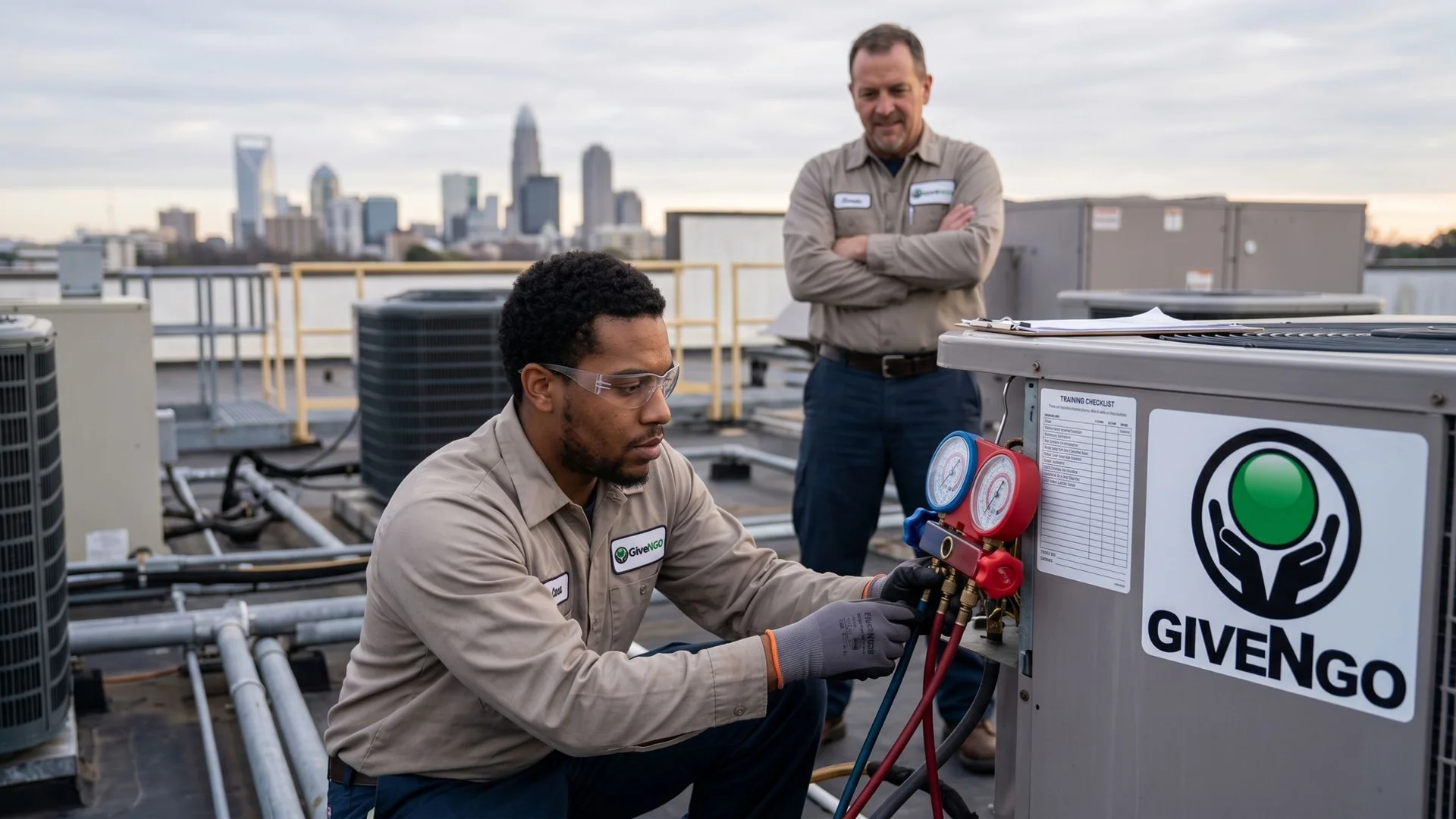
Hands-On HVAC Training in Charlotte — EPA 608 Ready
Hands-on HVAC technician training covering refrigeration, controls, EPA 608 prep, and Charlotte-area employer placement.
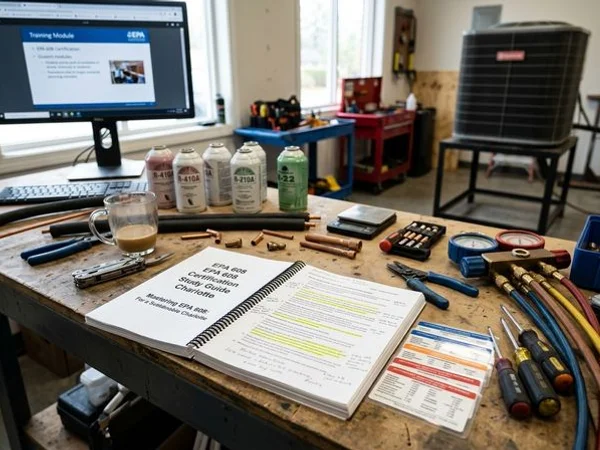
Charlotte's residential and commercial HVAC market is short on qualified technicians. Give N Go's HVAC track teaches the refrigeration cycle, basic load calculation, manifold gauges and multimeters, OSHA 10 safety, PPE, and the regulatory ground covered by EPA 608. Hands-on lab modules pair with the broader PACT framework so trainees graduate with a portable credential, EPA 608 readiness, and a direct line to local Home Builders Association employers.
HVAC Training Curriculum
Charlotte’s residential and commercial HVAC market is hiring faster than it can train. An aging workforce, new multifamily construction, and a regional data center boom all push demand for qualified technicians well past available supply.
Give N Go’s HVAC track is built for that gap. If you want a real path into HVAC work in Charlotte, this is where you start.
What You Learn in HVAC Training
The HVAC curriculum covers four core areas that every entry-level technician needs to master before landing a paid role. These skills form the foundation of safe, accurate service work.
- Refrigeration cycle. Students learn how heat moves, why pressure-temperature relationships matter, and how to read a manifold gauge set.
- Controls and tools. They train with industry-standard gear like Fieldpiece multimeters to perform safe electrical diagnostics, along with the hand tools they will use every day.
- Safety and PPE. We bake OSHA 10 construction safety directly into the program. This covers strict refrigerant handling rules, lockout and tagout procedures, and ladder safety.
- Load calculation basics. A 2022 Department of Energy study found over half of residential HVAC systems are improperly sized. Students get a working introduction to Manual J and Manual D so they can read what a designer specified and verify system sizing on the job.
EPA 608 Preparation
If you handle refrigerant, you need EPA 608 certification. This federal law is strict, and the credential lasts for life.
Our instructors prep students for all four sub-types to ensure they can legally work on any system. The test is difficult and demands serious study.
- Core Section. This mandatory foundation covers environmental laws and basic safety.
- Type I. This covers small appliances containing under 5 pounds of refrigerant.
- Type II. This section focuses on the high-pressure systems typically found in residential homes.
- Type III. This part involves low-pressure systems used in large industrial applications.
You sit the exam immediately after completing the coursework. Students must correctly answer at least 18 out of 25 questions to hit the 70% passing score for each module.
”A common mistake is failing the Core section because a student underestimated the environmental regulations. You cannot pass any Type certification if you fail the Core.”
Our program uses the latest 2026 EPA guidelines to drill leak rate math and safe recovery protocols. Every Charlotte HVAC employer recognizes this Universal certification.
Hands-On Labs
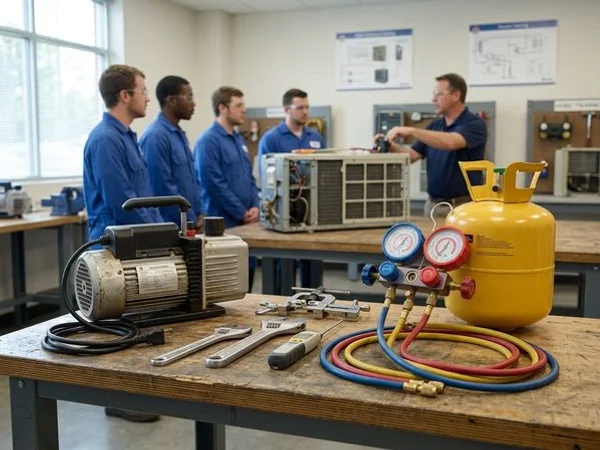
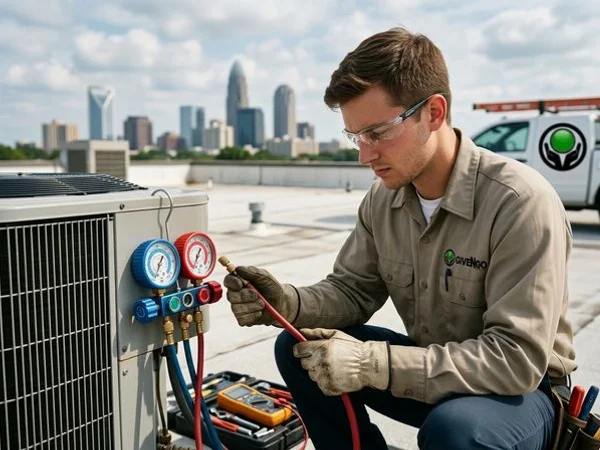
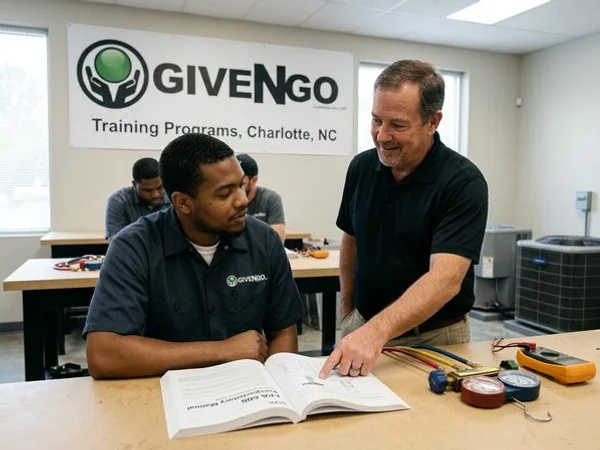
Lab hours pair with the broader Pre-Apprenticeship Certificate Training (PACT) framework. You log real work-based time alongside an instructor on partner job sites around the city.
We refuse to limit training to simple bench exercises. Charlotte HVAC employers want technicians who already know what a callback ticket looks like. They need people who can clean an expensive micro-channel condenser without bending the fragile fins.
To give you an idea of the training balance, here is how a student splits their time:
| Training Environment | Primary Focus | Practical Application |
|---|---|---|
| Classroom | Electrical theory and safety | Passing the EPA 608 exam |
| Lab Station | Component identification | Reading a manifold gauge set |
| Partner Job Site | Real-world diagnostics | Managing customer callback tickets |
This hands-on approach builds confidence and creates a technician you will feel comfortable inviting into your business or living room.
Career Pathway
Graduates step immediately into the field equipped for success. The current job market offers incredible stability and growth potential for new technicians.
These professionals typically transition right into several high-demand roles:
- Entry-level residential installation
- Light commercial HVAC service
- Registered Apprenticeship programs
According to a 2026 report citing the North Carolina Department of Commerce, skilled HVAC jobs in the state are projected to grow by 10% through 2030. This demand directly translates to competitive pay.
Our graduates typically see salary entry land in the mid-$40Ks for Charlotte residential service. This base pay climbs quickly as you stack field experience and secure an EPA 608 Universal license. See the HVAC technician salaries guide for the full breakdown.
For trainees deciding between Give N Go HVAC and a paid trade school, our HVAC training vs trade school comparison walks through the practical trade-offs. We want every applicant to make an informed decision about their future.
Apply or Refer
We offer rolling enrollment to keep up with the constant industry demand. The HVAC track admits youth ages 14 to 17 and adults under the broader PACT eligibility framework.
Finding a dependable technician starts with training one.
Please use the Contact form to apply directly or refer a promising student to our HVAC training program. We look forward to helping you or your referral build a rewarding career.
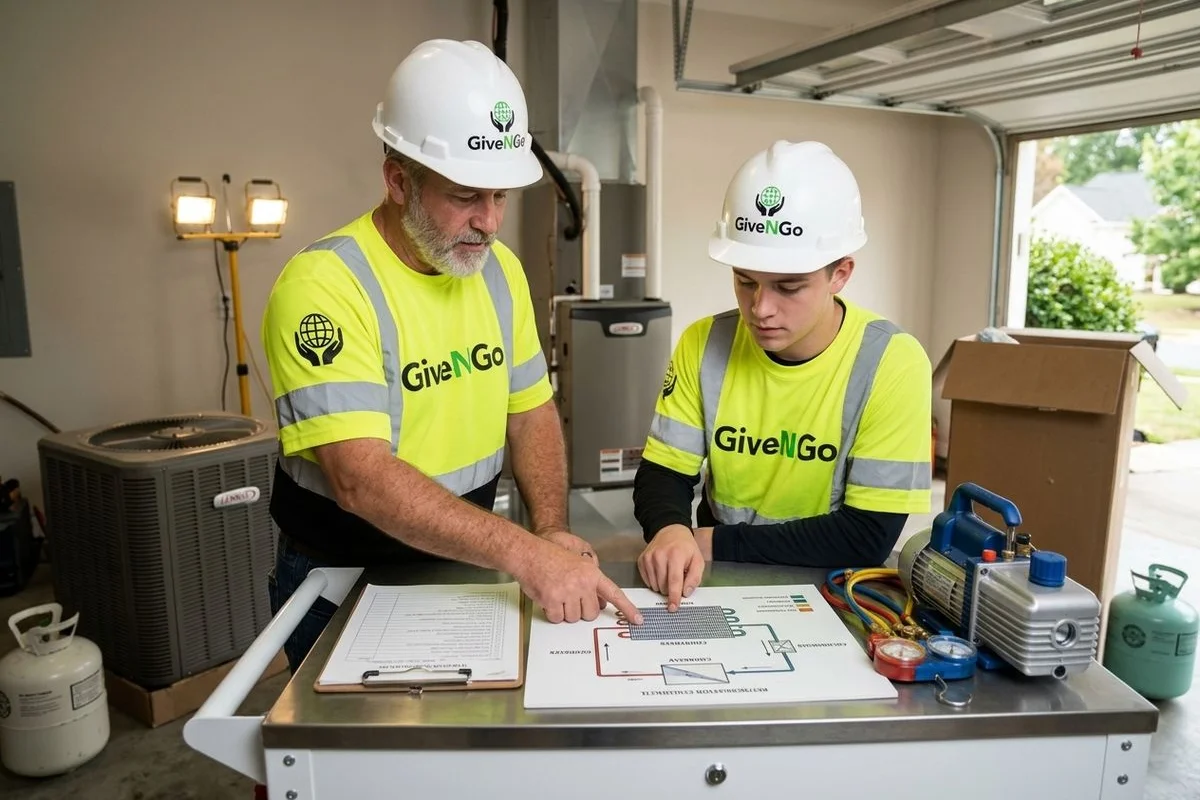
HVAC Skills & Career Outcomes
- • Refrigeration cycle, controls, and load-calculation basics
- • Manifold gauges, multimeters, hand tools and PPE
- • OSHA 10 safety integration
- • EPA 608 certification preparation (all four sub-types)
- • Hands-on lab hours with HVAC partner employers
- • Pathway into Registered Apprenticeships and entry-level technician roles
How a Cohort Runs
Refrigeration & Tools
Refrigeration cycle, manifold gauges, multimeters, hand tools, PPE.
Safety + Code
OSHA 10 safety, refrigerant handling, regulatory context.
EPA 608 Prep
Universal, Type I, II, and III sub-type preparation.
Field Hours
Hands-on labs with HVAC employer partners across Charlotte.
Connecting People and Opportunities
Building partnerships that create real impact in Charlotte-Mecklenburg.
What HVAC Graduates Say
"I came out of court-ordered diversion with no diploma. Give N Go's HVAC track plus the EPA 608 prep got me my first paying tech role."
Devonte L.
Hidden Valley
Ready to Get Connected?
We help connect individuals with the right opportunities through our partner network.
HVAC: Common Questions
Find answers about connecting with opportunities and partners.
Do I need EPA 608 to start the HVAC track?
Is the HVAC track tuition-free?
What employers hire your HVAC graduates?
Can I switch to plumbing or electrical after HVAC?
Explore More Pathways
PACT Pre-Apprenticeship
USDOL-recognized pre-apprenticeship credential combining classroom learning with 75% work-based training and direct employer connections.
NEC code awareElectrical Training
Entry-level electrician training: NEC code, residential rough-in, OSHA 10, and apprenticeship pathway.
PEX, rough-in, codePlumbing Training
Plumbing trainee program covering PEX, rough-in, fixture install, and apprenticeship pathway.
Ready to get connected?
Whether you're looking for opportunities, seeking to partner, or wanting to support our mission — we'd love to hear from you.