
What Electrical Apprentices Learn at Give N Go
Inside the Charlotte electrical track: NEC code basics, residential rough-in, multimeters, conduit benders, OSHA 10, and the pathway into NC apprenticeship.
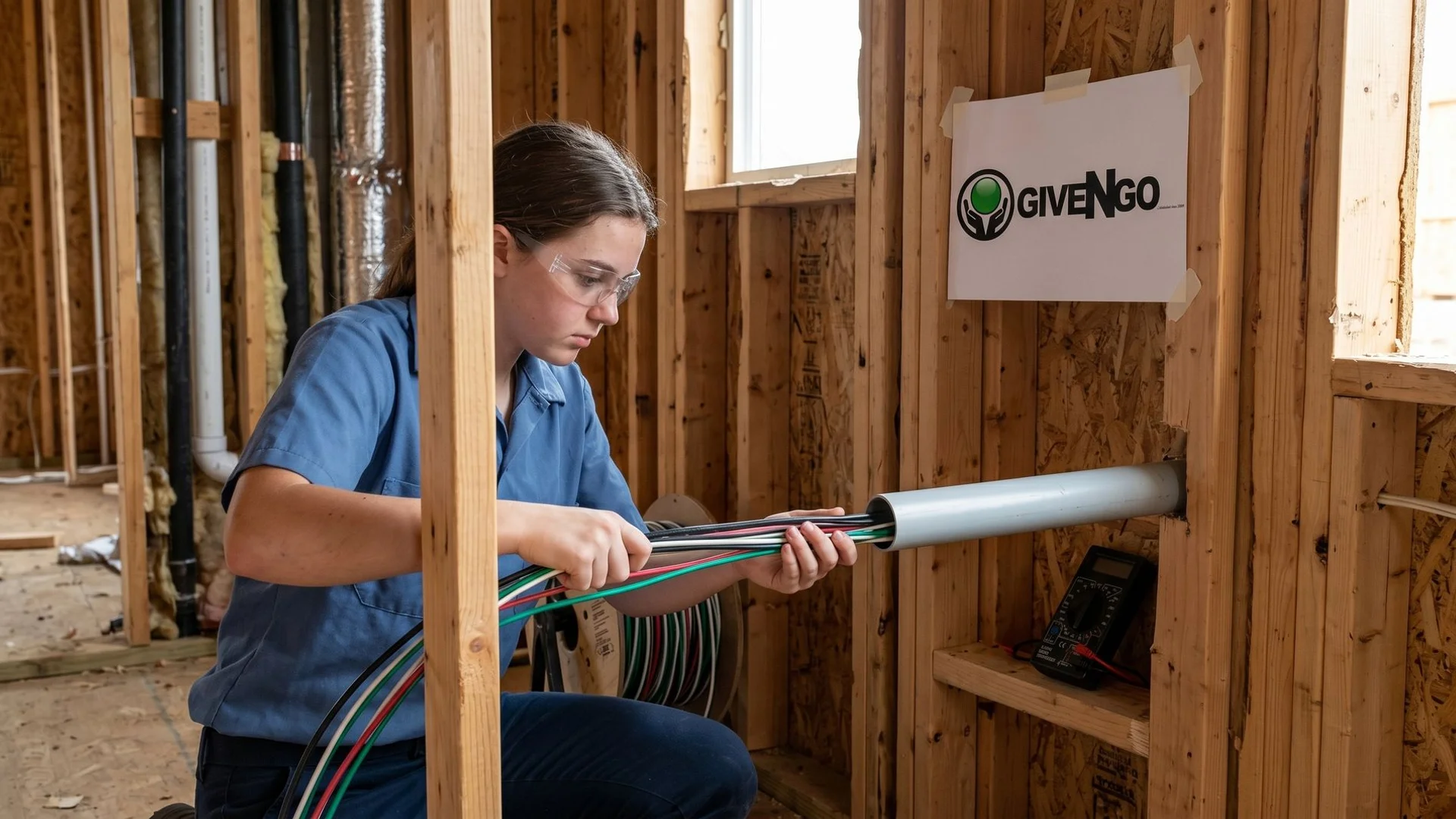
We see a major shift happening in the industry right now, and it directly impacts who shows up to fix your panel. As a property owner in North Carolina, you rely on safe, code-compliant electrical work to keep your business running.
A 2026 state workforce report highlighted that 70% of electricians in North Carolina are over the age of 50. Our electrical training curriculum focuses on producing a highly capable, entry-ready trainee to bridge this exact gap.
Instead of rushing workers into the field, this foundation course ensures new team members have the skills needed to assist licensed professionals safely. Let’s walk through the core modules these trainees master and look at how this rigorous preparation protects your property.
Module 1: NEC Foundation
We focus heavily on the structural changes introduced in the latest NEC updates, so every team member is always ahead of the curve. Comprehensive NEC code training kicks off the program, serving as the ultimate rulebook for safe installations.
For example, the NEC 2026 edition officially consolidated definitions into Article 100 and retired the vague term “low voltage” in favor of “limited energy” systems. Our trainees study these specific classifications to avoid failed inspections on your property.
This foundational module ensures they understand exactly how to read the code, rather than simply memorizing it. Key topics include:
- Definitions. Conductor, conduit, raceway, bonding, grounding, neutral.
- Article 100. General definitions and wiring methods under limited energy rules.
- Branch circuits. Sizing, ampacity, and circuit logic.
- Grounding and bonding basics. What is bonded, what is grounded, and why it matters for safety.
- Reading a schedule. Panel schedules and architectural plan symbols.
Module 2: Tools and Test Equipment
We introduce trainees to the daily diagnostic tools and equipment they will use to maintain safety and efficiency on your property. What does an entry-ready electrician carry in their bag?
Trainees learn to handle industry-standard meters, like the Fluke 117 True-RMS Multimeter, which is critical for identifying ghost voltages on modern panels. Our curriculum also includes thorough instruction on the latest Personal Protective Equipment (PPE) standards.
Strict adherence to the 2024 NFPA 70E guidelines is enforced, ensuring every team member knows that simply closing a panel door does not eliminate the need for proper arc-flash protection. Safety must always be the top priority.
The module covers:
- Multimeter proficiency. Using tools like the Fluke 117 for voltage, continuity, resistance, and basic troubleshooting.
- Conduit bender. Hand benders for EMT, including setup, marks, and basic offsets.
- Strippers, dikes, and lugs. The everyday tools for precise wire handling.
- Wire pullers and fish tape. Essential equipment for residential rough-in work.
- Personal Protective Equipment. Eye, hand, and hearing protection aligned with updated arc-flash awareness protocols.
Module 3: Residential Rough-In
We put trainees in a simulated environment during their residential rough in training to practice the critical groundwork that supports your home’s entire electrical system. What happens before the drywall goes up?
They learn the precise NEC requirements for securing NM cable (Romex), ensuring staples are placed exactly within 12 inches of every box. Our facility includes a mock-up framing layout where students install panels and run circuits from start to finish.
Simple mistakes like improper wire securing or incorrect box heights are among the most common reasons for failed rough-in inspections in North Carolina. By drilling these specific Code rules early, the team gets the job done right the first time on your property.
Trainees master:
- Mounting boxes. Setting precise heights for receptacles and switches to ensure a uniform appearance.
- Wire pulling and securing. Following the strict 12-inch stapling rule to prevent damaged conductors.
- Connections at boxes and panel. Stripping and landing wires neatly to avoid loose connections and fire hazards.
- Setting up for inspection. Preparing the site so local North Carolina inspectors can easily verify code compliance.
Module 4: Safety and OSHA 10
We mandate OSHA certification for every new hire before they are ever allowed to step foot on an active job site. Safety must always come before speed.
The course focuses heavily on OSHA’s updated guidance, which targets the dangerous myth that simply turning off a switch makes a panel safe. Our instructors enforce rigorous Lockout/Tagout (LOTO) protocols under 29 CFR 1910.147 to establish a verifiable Electrically Safe Work Condition (ESWC).
This thorough training guarantees that apprentices protect themselves, your property, and your family from preventable accidents. Core safety requirements include:
- Lockout/Tagout (LOTO). Physically padlocking breakers to prevent accidental power-on events.
- Working hot vs. de-energized. Strict protocols for verifying the complete absence of voltage.
- Arc-flash awareness. Understanding the severe heat and blast risks of short circuits.
- Fall protection. Safe ladder and scaffolding use for high ceiling installations.
What’s Not in This Track
We specifically limit the scope of this program to prepare trainees for supervised work, not independent contracting. It is important to understand the boundaries of an entry-level education.
A single foundation course cannot replace the thousands of hours required for full licensing. Our instructors intentionally leave complex service panel troubleshooting for the multi-year apprenticeship phase.
Tasks like commercial three-phase installations and high-voltage line work are strictly reserved for experienced journey-level electricians. This clear boundary ensures that only fully qualified experts are making critical diagnostic decisions on your electrical system.
Topics saved for apprenticeship include:
- Full NEC mastery. Complete code expertise develops over four years in the field.
- Service troubleshooting. Diagnosing complex hidden faults requires advanced apprenticeship training.
- Commercial three-phase work. Heavy industrial power systems are beyond the entry-level residential scope.
- High-voltage work. Handled exclusively by advanced journey-level and master electricians.
After the Track
We support their transition directly into the industry as a dedicated electrical apprentice charlotte residents can rely on. Where do these trainees go once they complete the foundation course?
Graduates target apprentice positions with trusted local mechanical and electrical contractors. Our teams recognize that full mastery requires years of dedicated field experience under a licensed professional.
North Carolina mandates 8,000 hours of structured, on-the-job training before an apprentice can test for their journey-level license.
This supervised experience is mandatory to master the trade. To understand the financial progression of these professionals, see the electrician careers and pay guide for the local wage path.
Apply
We provide this comprehensive course tuition-free for accepted participants to eliminate barriers to entry. Are you ready to support the next generation of skilled tradespeople?
Taking the next step is simple. Our support staff is ready to answer any questions about the electrical training curriculum or how these trained professionals can assist with your next project.
You can easily Contact us to discuss your specific needs.
Common Questions
Will I learn the entire NEC?
Is this rough-in or service work?
Do I need math?
Ready to start Electrical?
Tuition-free for accepted participants. Apply, refer a student, or talk to a partner about hiring graduates.