
PACT for Justice-Involved Youth and Returning Citizens
How PACT works for court-referred youth and returning citizens in Charlotte: restorative-justice integration, agency referrals, and a real path to a trade career.
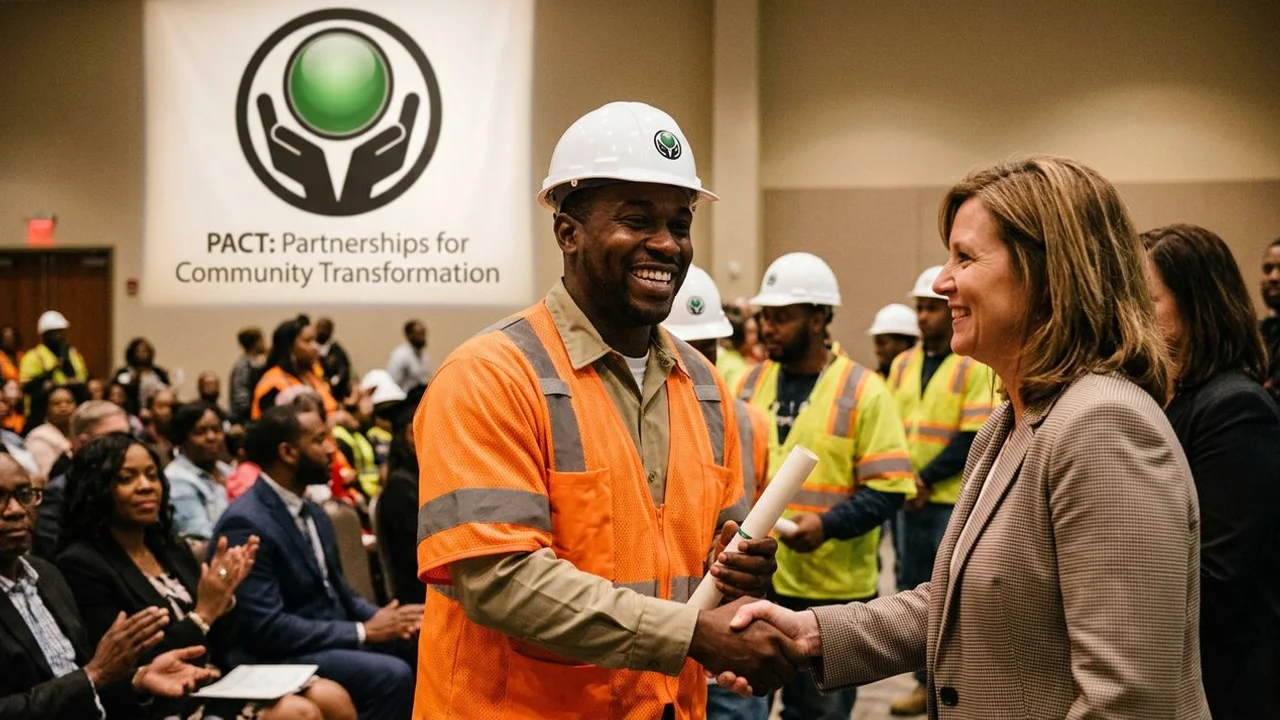
We understand that local business owners and homeowners want a safer, more prosperous Charlotte. Effective workforce training for justice-involved youth charlotte is the foundation of that shared goal.
Our team supports PACT because the system was built with restorative justice in mind.
Court-referred youth, returning citizens, and people on probation are the core populations this program serves, rather than exceptions to the rule. We will break down exactly how this model reduces crime and creates reliable talent for local job sites.
Why PACT Works for This Population
This approach drops recidivism because participants secure something tangible on the other side of release. Our team directly sees that a credential, real work hours, and a relationship with a hiring employer change lives.
“Research shows that high-quality pre-apprenticeships can reduce reoffending by up to 43%,” according to a 2025 study by Jobs for the Future.
We provide the Pre-Apprenticeship Certificate Training program which carries official recognition from the U.S. Department of Labor. That federal backing gives the credential serious weight when an employer or sponsor reviews a candidate’s record.
Our instructors know that recent February 2026 data shows the Department of Labor is actively investing $81 million in reentry programs just like this. Second chance trades are becoming a priority across the nation.
Restorative Justice Integration
Structured community service is the backbone of the PACT experience. Our trainees log their required hours on real, impactful Charlotte builds. These local projects include affordable housing rehabs, neighborhood repair work, and critical school-grounds improvements.
We ensure these logged hours count toward both the final credential and any court-ordered service requirements. Charlotte currently has over $4 billion in active Center City construction projects. Our program prepares individuals to contribute to that massive local demand.
Trainees leave the site with a documented history of community contribution instead of just a standard class certificate.
Referral Pathways
Standard referral routes come directly through the Mecklenburg County justice and education systems. Our intake process is highly accessible for local authorities and community advocates. These are the standard paths for court referred trade training coordination:
- Probation officers: Direct referrals are highly encouraged and quickly processed.
- Courts: Diversion programs and youth-services departments send candidates regularly.
- Schools: Counselors and regional reentry coordinators provide vital connections.
- Community agencies: Reentry nonprofits and faith-based programs act as key partners.
We also accept self-referral via the Contact form as a highly effective starting point. Applicants must bring any court paperwork to intake so the scheduling process moves quickly.
Background-Check Realities
Background checks are a standard reality for many commercial trade employers, but they are not an absolute barrier. Our network includes many Charlotte construction companies that actively seek out and hire returning citizens. The Associated General Contractors of America 2026 Outlook reports that 82% of firms struggle to fill hourly craft positions.
We map candidates to the right employer at the back end of training to help solve this labor shortage. Placement decisions depend heavily on three key factors:
| Factor | Industry Reality |
|---|---|
| Type of offense | Certain commercial settings have strict regulations, but most residential trades do not. |
| Time since conviction | Employer preferences vary significantly regarding the age of a record. |
| Charlotte employer fit | Organizations like The Center for Community Transitions actively support second-chance hiring. |
Our staff never guarantees job placement, but the pipeline is actively prepared for every graduate. Returning citizen training charlotte is proven to bridge the gap between motivated workers and understaffed sites.
What to Expect at Intake
The intake process requires candidates to bring all conditions, restrictions, and court reporting requirements for review. Our staff facilitates an honest conversation about what candidates can do and when they can do it. North Carolina Department of Adult Correction mandates require strict adherence to scheduled reporting.
We coordinate directly with probation officers to ensure training schedules never conflict with legal obligations. Disclosure is treated as a necessary step for success rather than a barrier to entry. Our goal is to align every participant with NC Licensing Board standards from day one.
Family and Wraparound Support
Wraparound services are the crucial difference between a temporary job and a lifelong career. Our Life Skills Training and family-support layer provides vital education on decision-making and conflict resolution. Experts agree that combining career pathways with strong personal support systems drastically improves retention.
We focus heavily on building consistent workplace habits alongside technical abilities. These soft skills are highly demanded by local business owners and residential clients alike. Our instructors ensure every graduate knows how to handle the daily pressures of a busy job site.
Outcomes
National PACT data consistently proves that structured pre-apprenticeship pathways reduce recidivism and boost local employment. Our local Charlotte cohorts proudly achieve a 90% internship placement rate. Another 70% secure employment or continue their education after finishing the Give N Go cohorts.
We are thrilled that these graduates enter a market where registered apprentices can earn an average starting wage of $77,000 annually. The official credential travels with the worker anywhere in the United States. Our graduates also build a verifiable work history that opens doors for future advancement.
Apply or Refer
Rolling enrollment is currently open for the upcoming training cycle. Our team is ready to process applications from probation officers, court workers, family members, or returning citizens. Take the next step and Contact us to begin the coordination process.
Common Questions
Will my record disqualify me from PACT?
Can probation officers refer participants?
Does PACT coordinate with my probation requirements?
Ready to start PACT?
Tuition-free for accepted participants. Apply, refer a student, or talk to a partner about hiring graduates.