
Fiber Optic Technician Careers and Pay in Charlotte
Charlotte fiber technician pay by experience, OSP vs ISP specialization, and BICSI/CompTIA credentials.
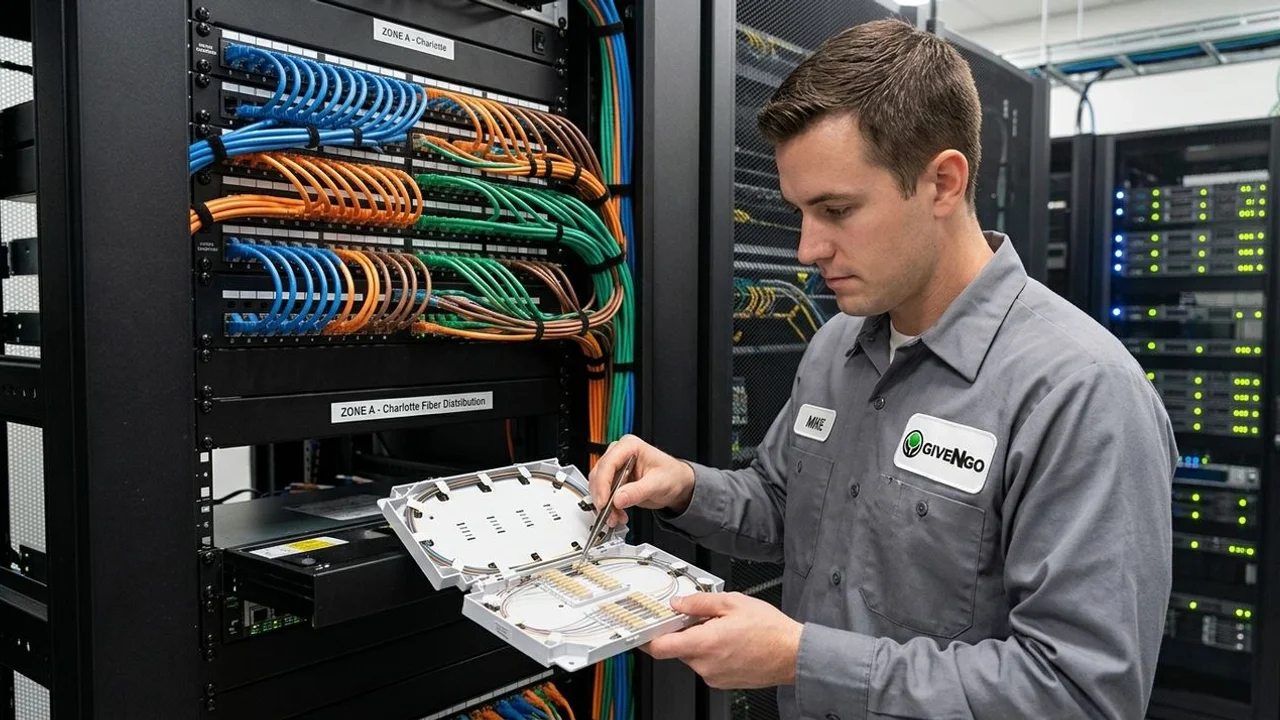
Our team knows that reliable internet is the backbone of any modern home or commercial property. You probably wonder what goes into the cost of installing and maintaining these high-speed networks.
The answer often comes down to the skilled professionals physically handling the delicate glass cables. We track fiber technician pay scales closely because they directly reflect the experience, specialty, and credentials required for top-tier work.
Understanding these wages helps property owners appreciate the value of a professional installation.
Let’s break down the 2026 salary tiers in the local region and explore exactly what skills command the highest premiums.
Estimates only. Actual pay varies by employer, certifications, location, union/non-union status, and benefits.
Pay by Stage (Charlotte)
Our research shows the average base salary for a Charlotte fiber optic technician in early 2026 sits around $56,472 per year. Entry-level roles start near $40,000, while experienced leads can easily exceed $80,000.
The specific stage of a worker’s career heavily dictates their total compensation package. We often explain to business owners that paying for senior-level expertise prevents costly network downtime.
For instance, an Outside Plant (OSP) splicer managing complex underground runs earns substantially more than a new trainee. Overtime pay, extensive travel premiums, and daily bucket-truck allowances frequently push OSP earnings much higher than base salaries.
| Career Stage & Role | Estimated Annual Pay Range |
|---|---|
| Entry fiber technician | ~$40,000 to $52,000 |
| OSP splicer (1 to 3 years) | ~$48,000 to $62,000 |
| ISP / data center tech | ~$50,000 to $68,000 |
| Lead splicer / project tech | ~$62,000 to $80,000 |
| Specialty (data center senior, project manager prep) | $75,000 to $100,000+ |
What Drives Pay Up
We consistently see that formal certifications and hands-on speed are the primary factors driving technician wages upward. Earning the Certified Fiber Optic Technician (CFOT) credential from the Fiber Optic Association pushes average annual salaries to around $69,000.
The specific skill sets below dictate the highest earnings in the local market.
- Splicing speed and quality. Time-on-tools matters, as fast fusion splicing reduces expensive labor hours on commercial job sites.
- BICSI credentials. Holding Installer 1, Installer 2, or Technician certificates instantly validates a worker’s technical competence.
- CompTIA Network+ or A+. This foundational IT knowledge strengthens ISP roles by bridging the gap between physical cables and active network switches.
- OTDR and certification skill. Operating advanced Fluke or EXFO testing equipment is absolutely necessary for documentation-heavy work that pays top dollar.
- CDL or specialty truck. Driving specialized Vermeer directional drills or heavy bucket trucks provides an immediate OSP-side premium.
We advise our clients that hiring technicians with these specific credentials guarantees a much safer and faster installation. Proper tooling and training eliminate the guesswork from complex network builds.
Charlotte is a major hub for financial and tech companies requiring critical Tier III data center infrastructure.
Specialty Premiums
We recognize that these specialized environments require distinct skill sets that contractors are willing to pay a premium for. The following areas represent the most lucrative specialties in the field.
- Data center work. Charlotte’s expanding data facilities provide steady employer relationships and premium hourly rates.
- Pipe and underground OSP. Managing active underground infrastructure comes with hazardous weather pay and substantial travel stipends.
- Project lead. Reading complex CAD blueprints, scheduling multiple crews, and mentoring trainees secures the highest project-based bonuses.
The added responsibility in these leadership roles directly translates to a significant bump in take-home pay. We always recommend prioritizing candidates who have proven experience in these high-stakes environments.
A seasoned project lead keeps the entire build operating smoothly and on schedule.
Employer Mix
The local market features a competitive blend of massive national carriers and specialized regional contractors. We observe several distinct categories of employers hiring fiber optic specialists throughout North Carolina.
Property owners benefit from this variety because it ensures a high standard of quality across different installation types. The largest pool of technical talent comes from the specific sectors outlined below.
- Regional fiber contractors. Companies like Prince Telecom represent the largest local talent pool and handle OSP-heavy builds.
- NC broadband ISPs. Major providers like AT&T and Ripple Fiber offer a steady mix of residential and commercial dispatch work.
- Structured cabling integrators. These firms concentrate on ISP networks and clean commercial office environments.
- Data center operators. Dedicated facilities hire directly to maintain proprietary server connections at premium pay rates.
We constantly monitor these employers to understand where the best talent is moving. High-quality network performance relies entirely on the expertise of these dedicated crews.
While top earners in Charlotte clear $83,020 annually, local living costs dictate how far that money actually goes.
Try the Earnings Estimator
We recommend using dedicated calculation tools to pinpoint exact geographic salary variations across the United States. Factors like local housing costs and state taxes drastically alter a technician’s true take-home pay.
The Trade Career Earnings Estimator covers fiber optics and helps model these specific financial variables. We encourage property managers to review these metrics to understand the true cost of retaining premium technical talent.
Adjusting compensation packages based on real-time data prevents unexpected turnover.
The PACT Pathway
Entering the industry requires a clear progression from basic safety protocols to advanced optical theory. We fully support structured apprenticeships because they rapidly develop the exact skills required for modern network construction. Following the Give N Go fiber track moves candidates from an entry technician role up through the rigorous BICSI and CompTIA certification stack, culminating in a high-paying specialty.
Technicians who pass the stringent 100-question Fiber Optic Association exams make far fewer critical errors on the job. Our contractors know that this level of verified competence is essential for any major commercial project.
This structured development clearly protects the client’s massive infrastructure investment. Hands-on mastery simply cannot be rushed or bypassed.
Apply
We make it simple for motivated individuals to start their technical journey in a rapidly expanding local market. Charlotte’s telecom sector is actively hiring for hundreds of open positions in 2026.
Prospective students and business owners looking to upskill their staff should Contact us today. Our team is proud to note that this specific program is tuition-free for accepted participants.
A quick conversation is the first step toward securing a reliable digital future.
Common Questions
OSP or ISP — which pays more?
Is BICSI worth getting?
Are there data center roles?
Ready to start Fiber?
Tuition-free for accepted participants. Apply, refer a student, or talk to a partner about hiring graduates.