
What Does a Fiber Optic Technician Actually Do?
A plain-English look at fiber technician work: splicing, OSP/ISP, broadband installs, and Charlotte-area employers in NC's fastest-growing infrastructure trade.
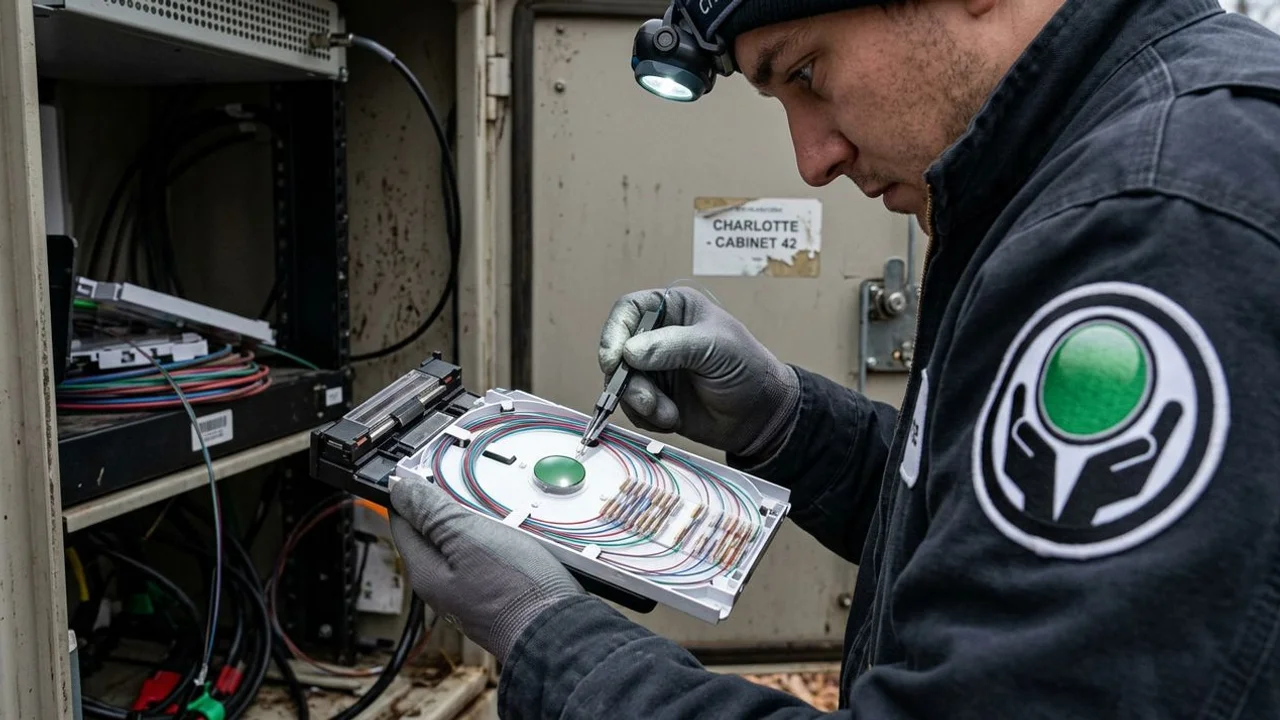
We see the telecommunications landscape shifting rapidly right now. Data center expansions and rural broadband initiatives are pushing infrastructure demands to historic highs. If you are wondering what does a fiber optic technician do, they are the highly skilled professionals who physically connect these digital pathways.
Our teams rely on these experts to install, splice, terminate, and test the cables that power the modern internet.
You will find incredible opportunities in this trade, especially here in North Carolina. Charlotte sits directly in the middle of a massive broadband and 5G build-out.
We are watching tech giants like Meta drive billions into AI data centers, which forces manufacturers like Corning to expand their local footprint to keep up. Let’s look at the daily responsibilities of a technician and explore how you can start this career path. This comprehensive guide breaks down exactly what you need to know.
What Does a Fiber Optic Technician Do: Two Big Categories
We categorize fiber optic work into two distinct environments: outside plant and inside plant. The daily hazards and required skill sets change drastically depending on where the cable is located. You will typically start your career handling tasks in both areas to build a well-rounded foundation.
Our veteran technicians usually choose a specific lane to specialize in after their first year or two on the job.
- OSP (Outside Plant): This covers all cables outside a building. Technicians handle aerial lines on utility poles, underground runs through manholes and conduit, pedestal cabinets, and the splice closures that join massive cable routes.
- ISP (Inside Plant): This involves managing cables inside buildings. The work focuses on climate-controlled server rooms, IDFs (Intermediate Distribution Frames), sprawling data centers, and business fiber drops.
This specialization allows you to master a specific set of environmental challenges. The choice ultimately depends on your personal preference for indoor or outdoor work.
What an OSP Tech Does
We rely on Outside Plant technicians to build the physical backbone of city networks by pulling and splicing exterior cables. These crews handle the heavy lifting required to get high-capacity cables from a central hub to residential neighborhoods. The job involves working through unpredictable weather conditions and coordinating with local utility schedules.
Our OSP teams perform several critical daily functions.
- Cable Pulling: Technicians route thick fiber lines through underground conduit or string them across aerial utility poles.
- Splicing: Workers perform fusion splices inside roadside pedestals, deep manholes, or climate-controlled splice trailers.
- Closure Work: Staff carefully seal outdoor splice cases to protect the delicate glass from harsh weather and destructive rodents.
- Aerial Work: Crews often operate bucket trucks to reach elevated lines, though climbing utility poles is sometimes necessary.
- Underground Operations: Technicians execute confined space entries into manholes and underground vaults to manage buried lines.
- Documentation: Staff maintain accurate as-built records and daily splice logs to track network changes.
Pro-tip: Spatial awareness in the bucket truck is the most important skill you can develop early on. A single accidental snag on an existing live cable can knock out service for thousands of local customers. We always advise new OSP techs to practice extreme caution when maneuvering around live power lines. This attention to detail prevents costly outages and keeps your crew completely safe. Safety protocols must be your top priority on every single job site.
What an ISP Tech Does
Our Inside Plant technicians handle the intricate finishing work, like routing and terminating cables inside commercial buildings. This environment is usually climate-controlled, but it demands extreme precision in tight spaces. Enterprise data centers and office buildings require clean, organized cable management to function correctly.
We expect ISP techs to master several highly technical fiber technician duties.
- Routing and Tray Work: Technicians carefully pull delicate cables through overhead trays and complex pathways inside commercial buildings.
- Termination: Staff attach specific connectors to the ends of fiber strands to plug them into active network patch panels.
- Splicing: ISP teams perform less splicing than OSP crews, but they frequently handle high-density ribbon fiber.
- Testing: Technicians shoot OTDR (Optical Time Domain Reflectometer) tests, measure light loss, and generate official certification reports.
- Patch Work: Staff execute precise cross-connections in Intermediate and Main Distribution Frames to link specific network switches.
These indoor environments require a much cleaner approach than outdoor muddy trenches. The work moves at a different pace and requires intense focus on tiny visual details.
Tools You’ll Use
We equip our crews with highly specialized gear, including fusion splicers and optical testers, to manipulate microscopic glass strands. A standard toolkit contains instruments designed to cleanly cut, prepare, and verify these fragile connections. You must learn to treat this equipment with care, as a dirty lens or a dull blade will instantly ruin a splice.
Our technicians carry several mandatory items in their bags to complete these jobs.
| Tool | Primary Function | Insider Detail |
|---|---|---|
| Fusion Splicer | Welds fiber strands together. | This machine perfectly aligns two glass cores and uses an electric arc to melt them into a single continuous piece. |
| Precision Cleaver | Prepares fiber ends for splicing. | A high-quality cleaver scores and breaks the glass at a perfect 90-degree angle to prevent signal reflection. |
| Fiber Stripper | Removes protective jackets. | Tools like the Jonard JIC-375 safely remove the 250-micron buffer coating without nicking the microscopic glass core inside. |
| OTDR | Tests fiber loss and locates faults. | An Optical Time Domain Reflectometer sends a light pulse down the line to measure the exact distance to a break or bend. |
| Visual Fault Locator (VFL) | Finds short-distance issues. | This pen-sized device shoots a bright visible red laser into the cable, making any nearby breaks or sharp bends glow brightly. |
| Power Meter | Measures optical signal strength. | Technicians pair this with a light source to verify that the light loss across a specific connection stays within acceptable limits. |
These tools require daily calibration to ensure accurate light readings. The precision of your instruments directly impacts the quality of your network connections.
Standards You’ll Learn
We heavily prioritize safety and technical accuracy by teaching strict industry standards like BICSI and OSHA guidelines. The telecommunications field relies on standardized rules so that equipment from different manufacturers works together flawlessly. Every reputable employer will require you to understand the basic codes that govern this physical infrastructure.
Our training programs align with three major pillars of compliance.
- BICSI Alignment: This global association defines the best practices for information and communications technology. Earning an Installer 2 or Technician credential validates your expertise to employers.
- TIA-EIA-568: This set of commercial cabling standards dictates exactly how cables should be routed, terminated, and tested to ensure reliable performance.
- OSHA 10: This fundamental safety certification teaches you how to identify and avoid common construction hazards on the job site.
This knowledge provides a massive advantage during your first job interviews. Getting familiar with these rules early prevents dangerous mistakes in the field. We encourage all aspiring techs to review the curriculum walkthrough on fiber splicing OSP/ISP basics. This resource provides a complete look at these foundational concepts. The guide covers exactly what you will encounter during your first week.
Where the Jobs Are in NC
We are currently tracking a massive influx of telecommunications jobs with regional fiber contractors and major internet service providers. Recent 2026 reports show tech companies like Meta investing heavily in artificial intelligence data centers across the state. This demand forces manufacturers like Corning to expand their local footprint to supply enough optical cables.
Our graduates are finding excellent opportunities in several key sectors, including roles as a broadband technician Charlotte companies desperately need.
- Regional Fiber Contractors: These specialized construction firms pull and splice massive cable runs on behalf of larger network providers.
- NC Broadband ISPs: Direct internet service providers constantly hire internal teams for residential and business installations.
- Structured Cabling Companies: These organizations focus heavily on ISP work, outfitting corporate offices and hyperscale data centers with organized network racks.
- Smart City and 5G Deployments: Municipalities are actively upgrading their traffic grids and cellular towers, which represents a rapidly growing slice of the job market.
The local market conditions have never been more favorable for entry-level workers. Finding a steady position is easier now than it was a decade ago. We update our industry resources regularly to reflect these current market shifts. For the why-now context surrounding this regional boom, see fiber optics: NC’s fastest-growing trade. You will discover exactly why this area has become a premier destination for this trade.
Pay Outlook
We monitor regional compensation data closely, noting that average Charlotte fiber technicians earn around $51,757 annually. As of early 2026, ZipRecruiter data shows entry-level candidates typically starting in the $40,000 to $50,000 range. This starting bracket allows you to earn a steady paycheck while you learn the basics of splicing and safety.
Our data indicates that experienced professionals can quickly climb into the $60,000 to $85,000 bracket. You can build a highly lucrative fiber splicer career by securing official industry credentials early on.
Professionals who complete their BICSI Installer 2 training often report salary bumps of up to $10,000 annually.
We highly recommend reviewing the fiber technician careers and pay guide for the full picture. This breakdown explains exactly how certifications impact your take-home pay. Employers aggressively recruit candidates who show a commitment to continuous learning.
Apply
We are actively looking for motivated individuals to join our free training program and build a hands-on career. The demand for infrastructure upgrades will only increase as artificial intelligence and remote connectivity expand. This program is completely tuition-free for accepted participants.
Our admissions team is ready to answer any questions you have about the enrollment process or what does a fiber optic technician do on a typical day. Please Contact us today to start the fiber optic training track. Start building the skills that will secure your future in the telecommunications field.
Common Questions
Inside or outside work?
Is splicing the whole job?
Is this safer than HVAC or electrical?
Ready to start Fiber?
Tuition-free for accepted participants. Apply, refer a student, or talk to a partner about hiring graduates.