
Who Qualifies for Fiber Optic Training in Charlotte?
Eligibility for Give N Go's tuition-free fiber optic technician track. Age, education, conditions, and what to bring to intake.
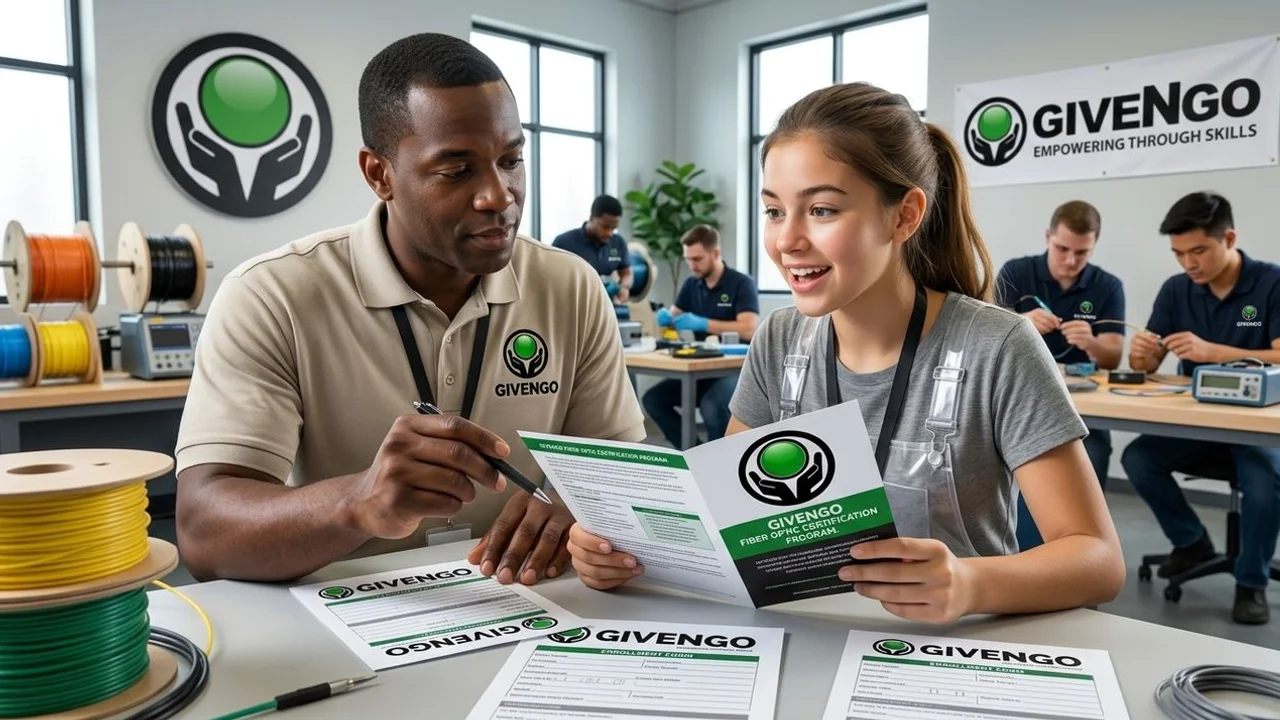
Upgrading neighborhood broadband requires highly skilled hands, and the Fiber Optic Training track at Give N Go operates under the broader PACT eligibility framework to meet that local demand.
We frequently hear from local business owners and homeowners asking about the standards behind the technicians installing their network lines. Understanding these baseline fiber optic training requirements provides real confidence in the infrastructure upgrades happening around town.
The baseline credentials ensure every technician stepping onto your property is prepared.
Our professional service team designed this guide to explain the exact qualifications trainees must meet. Let’s look at the intake process and how you can refer a promising student.
Core Eligibility
Evaluating Fiber Optic Training Requirements
Baseline standards dictate who can safely handle network installations in your commercial building.
We align our entry requirements with the practical needs of the telecommunications industry. The globally recognized Fiber Optic Association (FOA) confirms that technical mastery does not require a traditional high school diploma.
Reviewing cases individually helps build a stronger local workforce. Our intake process focuses strictly on aptitude and community impact. Here are the core eligibility rules for joining the program:
- Age parameters. Youth 14 to 17 join the youth track, while adults 18 and older enter the adult track.
- Residency limits. Applicants must live in Charlotte-Mecklenburg and surrounding referral areas to serve local businesses effectively.
- Educational background. No high school diploma is required, which aligns with modern trade standards.
- Justice involvement. Previous justice system involvement is welcome, and cases receive individual review.
Fiber-Specific Considerations
Splicing delicate cables requires unique attention to detail and specific physical capabilities.
We evaluate these physical traits early to ensure safe and accurate installations at your property. The training covers everything from underground lines to aerial setups.
Understanding these demands helps applicants prepare for the field. Our medical and physical guidelines include the following considerations:
- Vision. Good vision helps with precise splicing and termination work, though corrected vision is perfectly fine.
- Color discrimination. Technicians must interpret the TIA-598-C color code standard. This industry requirement utilizes a 12-color sequence, such as aqua for newer multimode cables, to organize strands. Color blindness is not an automatic disqualification, but applicants must flag it during intake.
- Heights and safety. Aerial outside plant (OSP) work involves significant time in bucket trucks. OSHA fall protection standards mandate the use of safety harnesses for any bucket truck work exceeding 6 feet in height. Indoor inside plant (ISP) work stays grounded.
- Hand fineness. Splicing glass strands requires incredibly steady hands. The training track intentionally builds this fine motor skill through repetitive practice.
Discussing any physical concerns directly with the team during enrollment is highly encouraged. We always work to find safe accommodations where possible.
What to Bring to Intake
Arriving prepared speeds up the enrollment process significantly.
We require specific documentation to verify eligibility and get trainees started. Bringing standard US Form I-9 acceptable documents, like a valid state ID or passport, accelerates future employment verification with local contractors.
Transcripts remain completely optional for this specific trade path. Our staff uses these documents to finalize your file efficiently. Please review the checklist of required intake items:
- State-issued ID or passport.
- Any school documents.
- Probation conditions (if applicable).
- Referral paperwork (if directed here by a counselor or agency).
How to Apply
A streamlined process means trainees reach the field faster to service local homes.
We simplified the application steps to remove unnecessary barriers. The intake team moves quickly once an application arrives.
Following these simple steps gets the ball rolling. Our enrollment pipeline consists of four distinct phases:
- Submit the Contact form. Pick the fiber optic option as the designated track.
- Intake conversation. Expect a follow-up call within two business days. This is much faster than the typical two to three weeks required by many traditional technical schools.
- Eligibility review. The team evaluates the submitted documentation thoroughly.
- Acceptance and orientation. Rolling enrollment means new cohorts start continuously.
Costs
High certification fees often prevent talented individuals from entering the tech sector.
We structure this program to be completely tuition-free for accepted students. Tools are fully provided during the training sessions.
The typical market costs for certifications can be surprisingly steep. Our program utilizes sponsorship-supported coverage for expensive testing vouchers in certain cohorts. Look at the current 2026 market costs compared to the out-of-pocket expenses for trainees:
| Certification or Item | 2026 Market Cost | Program Cost |
|---|---|---|
| Program Tuition | $2,000+ | $0 |
| CompTIA Network+ (N10-009) Voucher | $390 | $0 (Sponsorship available) |
| BICSI Installer 1 Exam Fee | $400 (Non-member) | $0 (Sponsorship available) |
| Required Hand Tools | $150 - $300 | Provided during training |
Securing coverage for these exams is a huge financial advantage. We highly recommend bringing up these specific voucher opportunities during the initial intake conversation.
Schedule
Cramming technical instruction into a single week rarely produces confident technicians.
We space out the learning process to ensure better retention of complex splicing techniques. While standard intensive certifications often squeeze 40 hours of instruction into a few exhausting days, a paced approach works better for long-term success.
Trainees spend 25 percent of their time on theory and 75 percent on practical application. Our curriculum strictly follows the PACT model to maximize hands-on experience. The schedule breaks down into these distinct phases:
- Classroom theory. Covering safety protocols and network architecture.
- Hands-on lab time. Practicing splices and tool handling in a controlled environment.
- Partner contractor field hours. Gaining real-world experience on active job sites.
What If Fiber Isn’t My Track?
Intricate wire splicing is simply not the right fit for everyone.
We fully understand that it is normal to pivot after learning more about the daily physical requirements. The broader tech sector offers plenty of alternative career paths.
United States Bureau of Labor Statistics (BLS) projections show strong continued growth for information security analysts and computer support specialists, offering excellent alternatives for those who prefer indoor environments. Our intake counselors can match applicants across other rapidly growing tech tracks at intake. These alternative training pathways include:
- IT support. Diagnosing hardware and software issues for local businesses.
- Cybersecurity. Protecting sensitive data and network infrastructure.
- Coding. Building applications and managing backend systems.
- General construction. Focusing on other essential physical trades.
Apply
Building a stronger local infrastructure starts with referring dedicated individuals to the right training.
We stand ready to guide you or your referral through the entire enrollment process. Connecting motivated people with high-quality technical education benefits the entire community.
Please Contact us to apply or review the fiber optic training requirements today.
Common Questions
Do I need an IT background?
Is fiber work physically demanding?
Can I switch from another trade?
Ready to start Fiber?
Tuition-free for accepted participants. Apply, refer a student, or talk to a partner about hiring graduates.