
Why Fiber Optics Is North Carolina's Fastest-Growing Trade
NC broadband expansion, 5G build-out, and the data center boom are driving sustained fiber technician demand. Here's why now matters for Charlotte trainees.
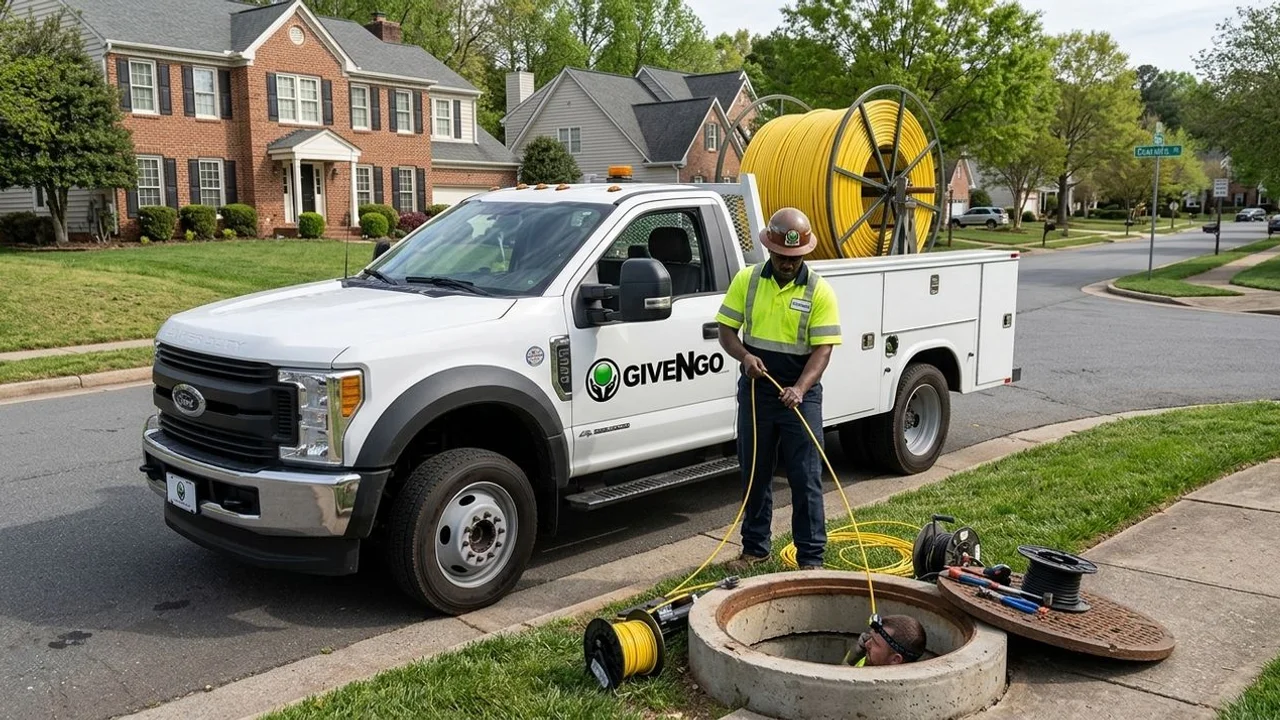
As a homeowner or business owner, you probably notice the constant roadwork and cable installations happening around your neighborhood. You might even wonder why your local internet upgrades take so long to complete.
That delay comes down to a serious market gap.
North Carolina is currently absorbing billions in federal and private digital infrastructure investments to meet the rising fiber optic demand in NC. This massive influx of capital means regional employers are desperately short on qualified technicians to service your properties.
Our instructors will break down the three main forces driving this sustained demand. Give N Go was built specifically to address this exact shortage and get your neighborhood connected faster.
Driver 1: Broadband Expansion
Federal and state funding is rapidly accelerating fiber-to-the-home (FTTH) builds across North Carolina. This massive rollout requires a constant supply of technicians for both aerial and underground installations to reach your specific address.
In April 2026, Governor Josh Stein announced a $319 million broadband expansion project funded by the federal BEAD program. This initiative specifically targets connecting 93,000 homes and businesses across the state.
Our region is also seeing massive private investments. Companies like Kinetic are actively delivering multi-gig networks to 40 different communities.
Key Broadband Funding Sources in NC:
- Federal BEAD Program: $319 million unlocked in 2026 for 93,000 locations.
- Stop-Gap Solutions: $26 million dedicated to connecting 5,100 rural addresses.
- Private ISP Investments: Companies like Kinetic rapidly expanding multi-gig networks.
Driver 2: 5G Build-Out
The ongoing 5G network rollout requires a massive amount of fiber backhaul to function properly. Every new cellular tower and small-cell site near your business needs a dedicated physical connection to the broader network.
Telecommunications companies are heavily investing in this infrastructure to ensure you have continuous cellular service. The telecom segment now represents over 40% of the fiber optics market revenue.
We see this translating to more aerial cable installations and complex splice work right outside your door. These projects require exact documentation and rigorous testing. The build-out phase is projected to run well through the late 2020s.
| Requirement | 5G Small Cell Sites | Traditional Residential Fiber |
|---|---|---|
| Density | High density (every few blocks) | Lower density (one per home) |
| Splice Complexity | High (multiple cross-connects) | Moderate (standard drop cables) |
| Data Capacity | Massive bandwidth needed | Standard gigabit speeds |
Driver 3: Data Centers
Charlotte sits at the center of a rapidly growing data center cluster that powers the cloud services your business relies on daily. Each new facility drives heavy demand for cross-connects, continuous splice work, and ongoing network maintenance.
North Carolina is experiencing a historic surge in digital infrastructure construction. Our nearby Catawba County is nationally recognized as a primary “Data Center Corridor.”
Why Data Centers Demand Premium Technicians:
- Steady Network Uptime: Your business apps rely on direct employer maintenance teams preventing outages.
- Higher Precision: Tasks involve delicate structured cabling inside climate-controlled environments.
- Constant Upgrades: AI facility demands require continuous network expansion to process consumer data.
The AI Fiber Boom
Tech giants like Microsoft are currently building a $1 billion project just an hour north of Charlotte. In April 2026, the Charlotte City Council even voted down a moratorium on new data centers to keep this economic growth moving.
AI advancements are a major factor behind this building boom. Advanced AI data centers require over 10 times more fiber optic cable than traditional cloud computing facilities.
This extreme demand led Meta and Corning to launch a $6 billion fiber supply agreement in early 2026. This includes a massive expansion of Corning’s Hickory manufacturing plant to support regional infrastructure.
Why Most Local Programs Don’t Teach It
Fiber optics is a highly specialized, mid-skill trade that falls completely outside the scope of traditional construction or IT programs. Most Charlotte trade-training peers focus exclusively on broad construction safety or basic software coding.
Teaching fiber splicing requires expensive, highly technical equipment like fusion splicers and Optical Time Domain Reflectometers.
Our local community colleges typically run standard NCCER construction models that simply ignore the telecommunications infrastructure your home relies on. Coding bootcamps only focus on software, completely missing the physical layers of the internet.
“The real constraint in modern data centers isn’t just computer chips; it is moving massive amounts of data quickly through ultra-pure glass fiber.”
The Practical Training Advantage
This leaves specialized fiber skills vastly under-represented in the local labor pool. Give N Go’s fiber optic track is explicitly built for this exact training gap.
We provide the hands-on equipment practice that employers actually require. This practical experience ensures graduates can properly install the hardware in your commercial buildings.
What This Means for You
For anyone exploring fiber optic technician careers in NC, the current market conditions offer serious job security. Whether you are a business owner looking to upskill an employee or an individual seeking a career change, this represents a long-term pathway built on decades of projected growth.
Recent April 2026 salary data shows exactly how lucrative this path can be in our state. The average fiber optic technician in North Carolina earns around $52,545 annually.
Salaries jump significantly in major employment hubs. Raleigh technicians average $58,013, while experienced leads can easily surpass $80,000 to $104,000 per year.
Career Benefits of Fiber Training:
- Sustained demand: We are looking at a decade of build-out years, not a temporary spike.
- Career portability: Your technical skills travel easily across North Carolina and nationwide.
- Pay growth: Entry pay starts around $40,000 to $50,000 and scales quickly with experience.
- Specialty options: You can choose between outside plant (OSP) work, inside design support, or premium data center roles.
Maximizing Your Earning Potential
Earning specific industry credentials like BICSI or CompTIA will accelerate your progression into those top salary tiers.
We highly recommend pursuing these credentials as soon as you secure your first position. This proactive approach guarantees faster promotions and better service quality.
Charlotte Employer Mix
The Charlotte region features a diverse mix of employers ranging from local broadband contractors to international tech giants. Building a stable broadband technician career in Charlotte is highly achievable with our local employer mix.
Our area is particularly rich in telecommunications headquarters and manufacturing centers. You will find that holding a specialized certification makes your resume stand out immediately to these exact hiring managers.
Top Local Employer Categories:
- Regional fiber contractors: Focus heavily on outdoor OSP installation and municipal builds.
- NC broadband ISPs: Companies like Kinetic and AT&T hire for a mix of residential install and repair service.
- Structured cabling companies: Deal mostly with indoor ISP installations for commercial office buildings.
- Data center operators: Facilities like Segra and American Tower offer premium specialty roles.
- Manufacturers: Companies like Corning operate massive regional hubs supporting global supply chains.
The PACT Pathway
The Give N Go program uses a structured progression model to take you from a complete beginner to a highly employable specialist. We focus on practical skills that local managers actively look for during interviews.
Your journey starts with core fundamentals and moves directly into specialized applications.
The Step-By-Step Process:
- Complete the Give N Go fiber track.
- Secure an entry-level technician role with a regional partner.
- Earn advanced BICSI credentials while working.
- Build a specialized skill stack for premium data center or network design positions.
Next Steps and Resources
For specific curriculum details, please review our fiber splicing OSP/ISP basics.
For a detailed local wage outlook, check out the fiber technician careers and pay guide.
We designed this exact pathway to maximize your earning potential in the shortest reasonable timeframe. Graduates consistently praise the clarity of this step-by-step approach.
Apply
Starting your new career in telecommunications is straightforward and completely free for accepted participants. We remove the financial barriers so you can focus entirely on learning the trade.
This ensures our classrooms remain full of dedicated students ready to improve local infrastructure.
Our team is ready to answer any questions you have about the schedule or the curriculum. Simply Contact us to start the application process today.
Common Questions
Will fiber demand drop off?
Is this an NC-only trade?
Do I need a CDL?
Ready to start Fiber?
Tuition-free for accepted participants. Apply, refer a student, or talk to a partner about hiring graduates.